
The first hazard of unconnected grounding wire clamp is that it directly threatens the service life and operating stability of electrical equipment, and even causes permanent damage to the equipment. In a normally operating power system, non-charged components such as equipment housings and metal brackets may produce induced voltage or leakage current due to factors such as aging of the insulation layer, line failure, or lightning strikes. The core role of grounding wire clamp is to quickly introduce these abnormal currents into the earth to avoid the accumulation of electric charge on the surface of the equipment. If the grounding wire clamp is not connected, these abnormal currents will have nowhere to be released, which will cause the internal components of the equipment to overheat, affecting accuracy and efficiency. If it is heavy, it will cause serious failures such as breakdown of the insulating layer and burning of the coil. According to the "Power Equipment Failure Statistics Report" released by the International Electrotechnical Commission, equipment damage accidents caused by unconnected or grounding wire clamp failure account for 28% of the total electrical equipment failures worldwide, and the average equipment repair or replacement cost caused by each accident is as high as 12,000 to 50,000 US dollars.
More seriously, the failure of the grounding wire clamp to connect will directly threaten the life and safety of on-site operators. According to statistics from the U.S. Occupational Safety and Health Administration, about 40% of the industrial casualties caused by electrical shock worldwide every year are related to the lack or failure of the grounding wire clamp. When the equipment leaks electricity, the unconnected grounding wire clamp cannot form a safety circuit. At this time, if the personnel touch the metal shell of the equipment, the current will be introduced into the earth through the human body, causing an electric shock accident. Even a 10mA current may cause the body's muscles to spasm and fail to break free. And an electric current of more than 50mA may cause ventricular fibrillation in just 0.1 seconds, which is life-threatening.
In addition, the grounding wire clamp is not connected and will destroy the grounding protection mechanism of the power system, causing chain failures, leading to large-scale production interruptions or power grid fluctuations. In an industrial power distribution system, the grounding wire clamp and the overcurrent protection device together form a ground fault protection system. When a ground fault occurs on the line, the grounding wire clamp can quickly amplify the fault current, trigger the protection device to trip, cut off the fault line, and avoid the spread of the fault. If the grounding wire clamp is not connected and the fault current cannot reach the action threshold of the protection device, the fault will persist for a long time, which may cause the line to overheat, the cable to burn, and even cause damage to core equipment such as transformers and power distribution cabinets, causing power outages in the entire workshop or factory area.
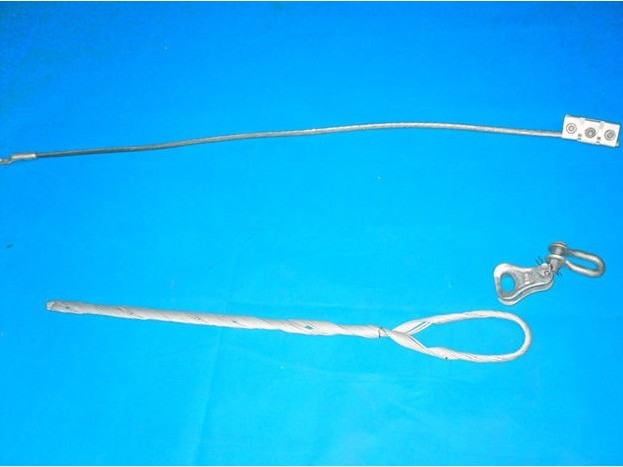
Facing the multiple risks of unconnected grounding wire clamp, choosing a grounding wire clamp that meets international standards and has reliable quality is an inevitable choice for B-side buyers to ensure production safety and system stability. As a professional manufacturer, the grounding wire clamp we produce has passed a number of international authoritative certifications. It is made of high-conductivity multi-strand copper core material, and the outer layer is wrapped in an oil-resistant and aging-resistant insulating layer. It can maintain stable performance in extreme environments and adapt to the application needs of industry, construction, new energy and other fields.