In power transmission line systems, attention is often focused on core components—such as the conductors themselves, tower structures, and insulators—while seemingly inconspicuous small fittings are easily overlooked. In reality, however, these minute components frequently determine the overall stability and service life of the entire transmission line. Preformed armor rods represent precisely such a critical yet frequently underestimated product.
The Chain Reaction of Conductor Damage
Transmission conductors are continuously exposed to complex environments and subjected to a multitude of external forces, including:
Aeolian vibration (wind-induced oscillation)
Thermal expansion and contraction caused by temperature fluctuations
Additional loads resulting from ice and snow accumulation
Electromagnetic effects generated by current flow
These factors create points of stress concentration at specific critical locations along the conductor—such as at suspension clamps, tension clamps, and splice joints. Should even a minor defect arise at one of these locations, it can trigger a cascading chain reaction:
Fracture of individual aluminum strands
Localized reduction in mechanical strength
Exacerbation of vibration amplitudes
Accelerated fatigue damage
Over time, these localized issues gradually propagate, ultimately leading to a degradation in the performance of the entire conductor section and potentially culminating in a conductor failure or breakage. Faults in power transmission lines rarely occur abruptly; rather, they typically evolve gradually from a single, minute point of initial damage.
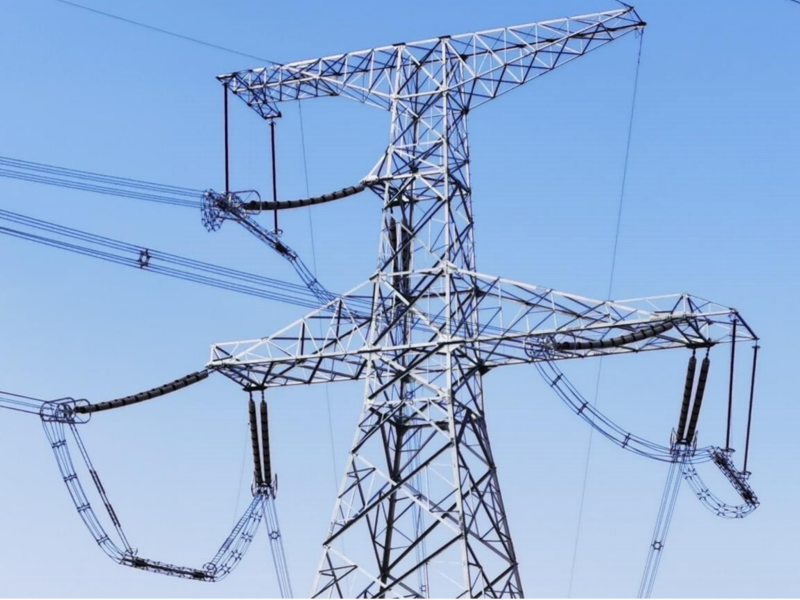
How Does Localized Wear Lead to Systemic Failure?
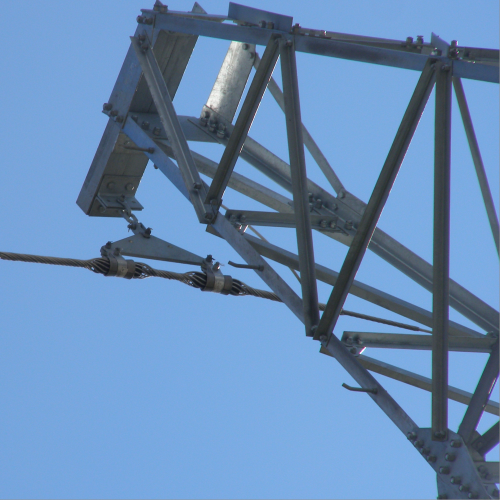
In practical engineering applications, the areas of a conductor most prone to failure are often those in contact with hardware fittings. For instance, at the contact points between a conductor and a line clamp, prolonged friction and vibration can easily give rise to the following issues:
Surface abrasion
Peeling of the aluminum layer
Formation of micro-cracks
Metal fatigue
Although this localized wear may appear minor, it can significantly compromise the conductor's load-bearing capacity. Once the structural integrity at a specific location diminishes, it disrupts the overall force equilibrium of the conductor; this causes stress to redistribute to other areas, thereby creating new points of weakness. If wear at these critical contact points is not effectively managed—even when utilizing high-quality conductors—the overall service life of the transmission line cannot be guaranteed.
How Do Preformed Armor Rods Protect Conductors?
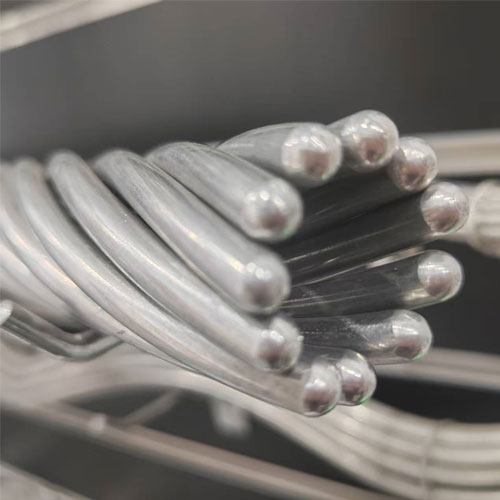
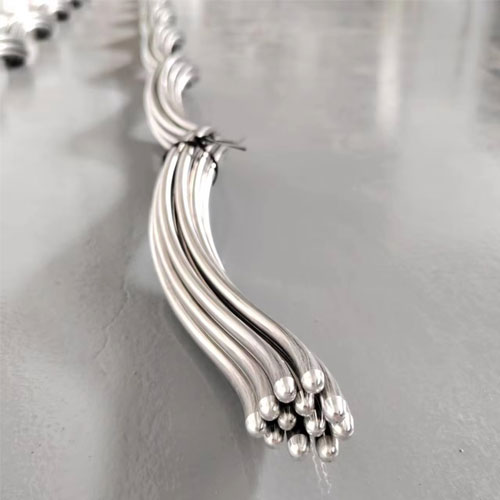
The unique structural design of preformed armor rods—specifically, their helical preformed configuration—enables them to tightly encase the outer layer of the conductor, forming a protective shell that serves multiple functions:
1. Dispersing Mechanical Stress
The Preformed Armor Rods redistribute stress—which would otherwise be concentrated at a single point—across a larger contact area, thereby preventing localized overloading.
2. Reducing Friction and Abrasion
By introducing a cushioning layer, the rods minimize direct friction between the conductor and the hardware fittings, thereby mitigating wear issues at their source.
3. Absorbing Vibration Energy
The helical structure possesses inherent elasticity, allowing it to absorb a portion of wind-induced vibration energy and reduce fatigue damage to the conductor.
4. Providing Additional Structural Support
In instances where the conductor sustains minor damage, the Preformed Armor Rods act as a "reinforcement" mechanism, preventing the damage from propagating further.
Precisely because of these functions, preformed armor rods do not merely protect the conductor; they serve to lower the overall risk profile of the entire transmission line.
In complex power transmission systems, every detail can emerge as a critical factor influencing overall performance. By optimizing structural load distribution, minimizing abrasion, and controlling vibration, Preformed Armor Rods significantly enhance the operational stability of conductors. If you are seeking a more reliable protection solution for your transmission lines, we invite you to contact Vilun for expert recommendations on power line protection products.