In the process of operation, maintenance and upgrade of high-voltage and UHV transmission lines, the installation quality of corona ring coil will affect the effect of suppressing corona. In addition, it may also cause new problems such as wear of line fittings and uneven force of insulators due to improper installation, laying safety risks for the operation of the power grid.
Before officially entering the installation process, it is necessary to confirm the installation environment and working conditions of corona ring coil. The construction team needs to verify key parameters such as the voltage level of the line to be installed, the type of insulator string, and the specifications of the fittings. It also needs to evaluate the on-site construction environment to ensure that the purchased corona ring coil is fully adapted to the on-site equipment and construction environment.
In addition, an inventory of installation tools and materials is required. The tools that the construction team needs to prepare include: torque wrenches, insulated gloves, non-slip safety helmets, aerial work ropes and other safety protection tools, as well as sandpaper, anti-rust grease, and cotton cloth. The main points of material inspection include: checking that the surface of the corona ring coil is free of scratches, deformation, coating shedding and other defects, the specifications and quantities of supporting bolts, nuts, and washers meet the packing list, and whether all metal parts have been galvanized or anticorrosive treatment.
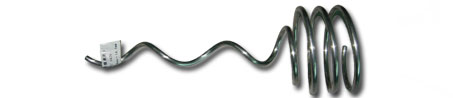
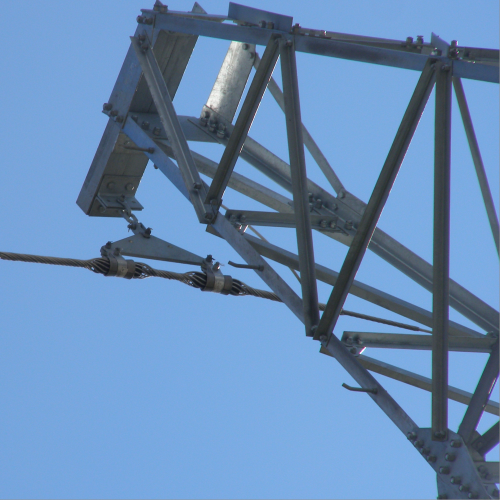
After completing the preliminary preparations, enter the formal installation process. The first step is to accurately locate the installation location. The installation location of the corona ring coil needs to strictly correspond to the key nodes where the electric field of the line is concentrated, usually both ends of the insulator string. Taking the suspended insulator string as an example, when installing, the connecting surface of the metal fittings at the end of the insulator string needs to be wiped clean with a cotton cloth. If there is an oxide layer or burrs on the surface of the metal fittings, it needs to be gently polished to smoothness with sandpaper, and then a thin layer of anti-rust grease is evenly applied to the connecting surface to reduce the frictional resistance during installation. Then, align the connecting flange of the corona ring coil with the fittings flange, so that the curved surface of the corona ring coil faces the wire side, and the center of the ring body and the center of the insulator string remain coaxial, and the deviation cannot exceed 3mm.
The second step is bolt fastening and torque control, which is an important part of determining the stability of the installation. When installing, the diagonal fastening method needs to be used. First, all the bolts are pierced into the flange holes and tightened initially, and then the calibrated torque wrench is used to gradually tighten the bolts to the specified torque in the diagonal order. A single bolt must not be screwed to the maximum torque at once, otherwise it will cause uneven force on the flange, causing deformation of the corona ring coil or loosening of the fittings. After the fastening is completed, you need to check again whether the position of the ring body is offset, and use a measuring tape to detect the gap at the flange connection so that the gap does not exceed 0.2mm. If the gap is too large, you need to loosen the bolt and re-adjust the position and tighten again until it meets the requirements.
After the installation is complete, a comprehensive quality inspection and recording of corona ring coil is also required. The first is the appearance inspection: observe whether the surface of the corona ring coil has new scratches or deformation due to installation operations, whether the exposed threaded bolts meet the specifications, and whether the washers are fully fitted to the flange surface without loosening. Then there is a preliminary test of electrical performance. If conditions permit, a high-voltage electroscope or a partial discharge detector can be used to test the partial discharge of the installation site before the circuit is charged to ensure that there is no abnormal discharge signal. Finally, it is necessary to record the installation information in detail, including the installation date, line number, corona ring coil model, bolt torque value, test data, etc., to form a complete installation file, which provides a traceability basis for later operation and maintenance.