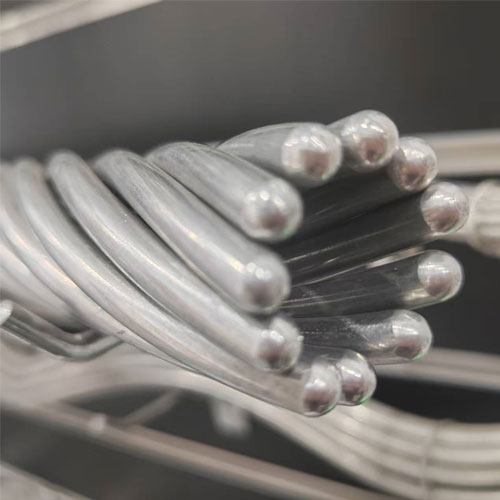
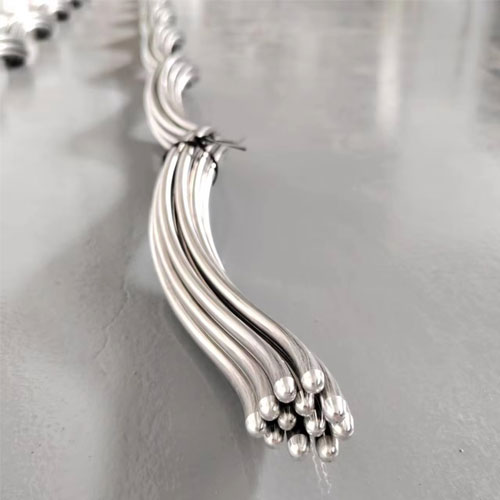
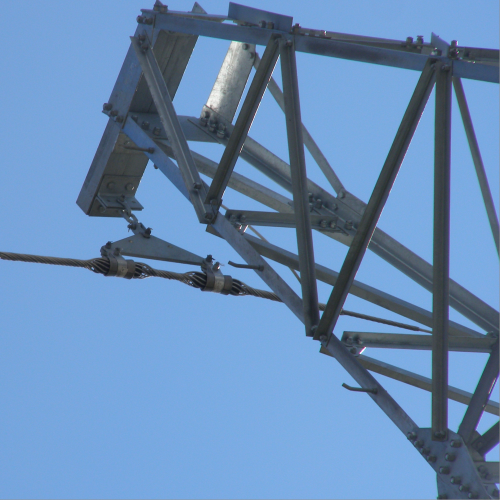
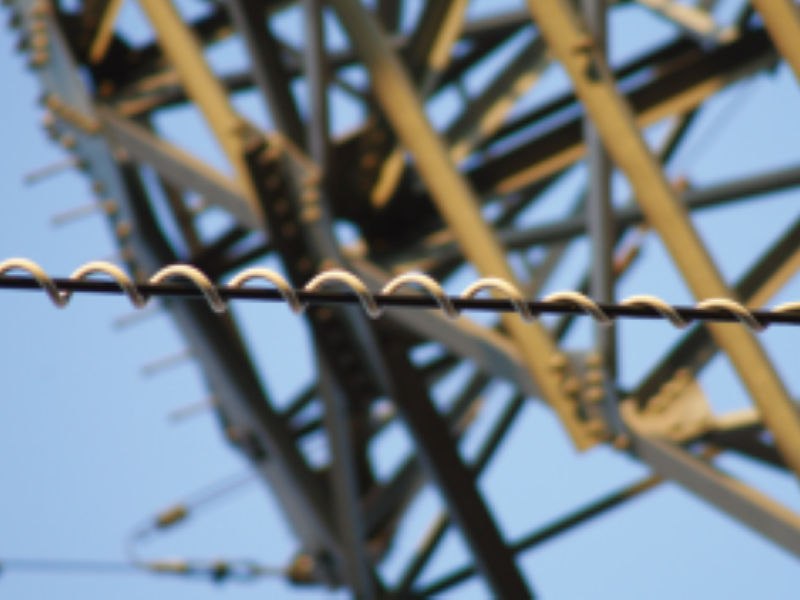
The purpose of spiral vibration damper is to suppress the physical principle of wire vibration by actively consuming energy, which can resolve the risk of wire vibration from the source. Its working mechanism revolves around the two functions of resonance cancellation and energy absorption. When the wire vibrates under the action of wind, the spiral vibration damper will follow the synchronous movement of the wire, using its own special structural design, such as spiral shape, segmented counterweight, etc., to produce inertial forces in the opposite direction of the wire vibration, breaking the original vibration balance of the wire. At the same time, the elastic components and damping materials inside the spiral vibration damper will convert the vibration energy into thermal energy or mechanical energy, which will quickly attenuate the vibration amplitude of the wire, and ultimately control the vibration within a safe range. This characteristic of suppressing vibration with vibration and consuming energy to protect the wire allows spiral vibration damper to adapt to the protection needs of different voltage levels and different wire types. Whether it is plains, mountainous areas or coastal environments with high humidity and high salt spray, spiral vibration damper can stably play a protective role, which is also the main reason why it has become the standard protective equipment for global transmission line projects.
Judging from the practical application scenarios, the use of spiral vibration damper has deeply covered the safety and security of the entire life cycle of the transmission line. In the new line project, spiral vibration damper is installed synchronously with wires, insulators and other equipment, and the first protection for the line is established from the time it is put into operation to avoid damage to the wires due to initial vibration accumulation. In the transformation of old lines, the installation of spiral vibration damper is a low-cost and high-efficiency upgrade solution. There is no need to replace the wires or reconstruct the line structure. Vibration protection can be upgraded by simply fixing the fixture, which greatly reduces the transformation cycle and cost. Taking a European power grid company as an example, after they installed spiral vibration damper in the transmission line of a wind farm on the North Sea coast, the incidence of wire vibration failure decreased by 72% year-on-year, and the replacement frequency of metal fittings decreased by 50%, saving enterprises more than 1 million euros in operation and maintenance costs every year. This case fully confirms that the use of spiral vibration damper is not only passive protection, but also can actively reduce costs and increase efficiency for power companies and improve the efficiency of asset operations.
However, not all spiral vibration dampers can achieve the above-mentioned efficient protection effects. At present, some low-cost products on the market have problems such as poor material quality and unreasonable structural design. They usually use ordinary plastics instead of weather-resistant engineering plastics, which causes the equipment to age and crack easily in high temperature and cold environments. It also tends to ignore the matching of wire diameter and vibration frequency, resulting in insufficient anti-vibration effect or excessive energy consumption. These problems not only fail to realize the purpose of spiral vibration damper, but may become a new line safety hazard due to equipment falling off and breaking.
For you who are looking for a reliable solution for the safety of transmission lines, choosing a high-quality spiral vibration damper is not only the protection of line equipment, but also a long-term investment in the stable operation of the power system. We can not only provide you with products that meet international standards, but also provide customized protection solutions according to your specific project needs, and are equipped with a professional technical support team, from product selection, installation guidance to late operation and maintenance, so that your project is worry-free throughout the process.