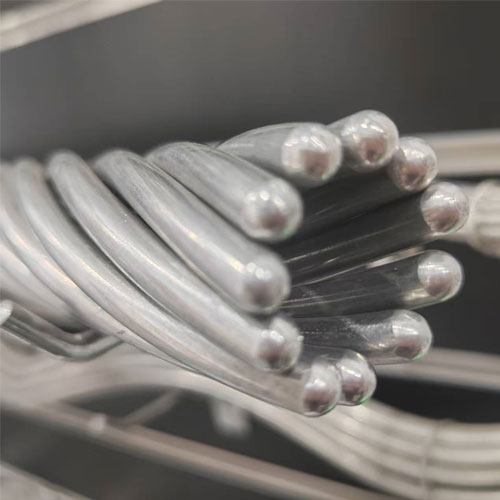
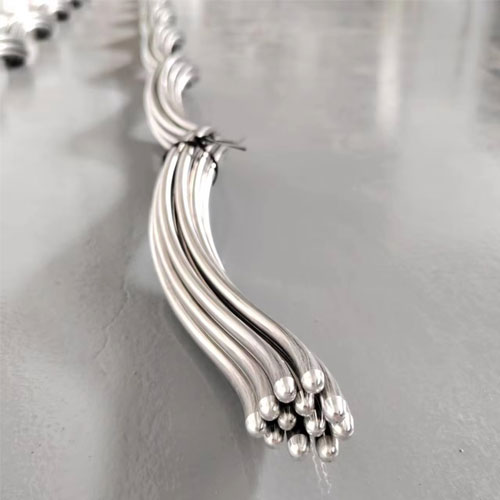
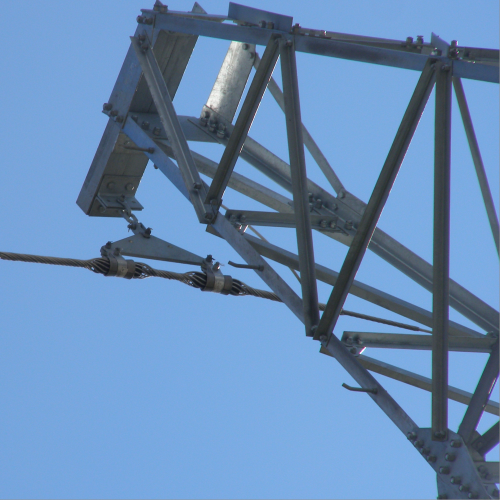
In overhead fiber optic cable construction, the downlead process is a critical stage of the entire installation. The Downlead Clamp for Fiber Optic Cable is an essential fitting used to secure the cable and reduce mechanical damage.
This article explains key construction specifications, precautions, and the fixing methods of two common types of downlead clamps.
I. Key Construction Specifications During the Downlead Process.
When guiding a fiber optic cable from a pole or tower down to the ground, the following requirements must be strictly followed:
1. Do Not Drop the Cable Directly.
During the downlead process, the cable head should be guided by personnel to ensure it is lowered smoothly and steadily to the ground. This prevents friction between the cable and the tower or pole, which could damage the outer sheath or internal fibers.
2. Supervision at Turning Points.
At bends or structural transition points, personnel must monitor the cable in real time to prevent jamming, crushing, or abrasion.
3. Control the Minimum Bending Radius.
The bending radius of the fiber optic cable during installation should be no less than 40 times the cable diameter, preventing small loops or sharp bends that may cause microbending loss or fiber breakage.
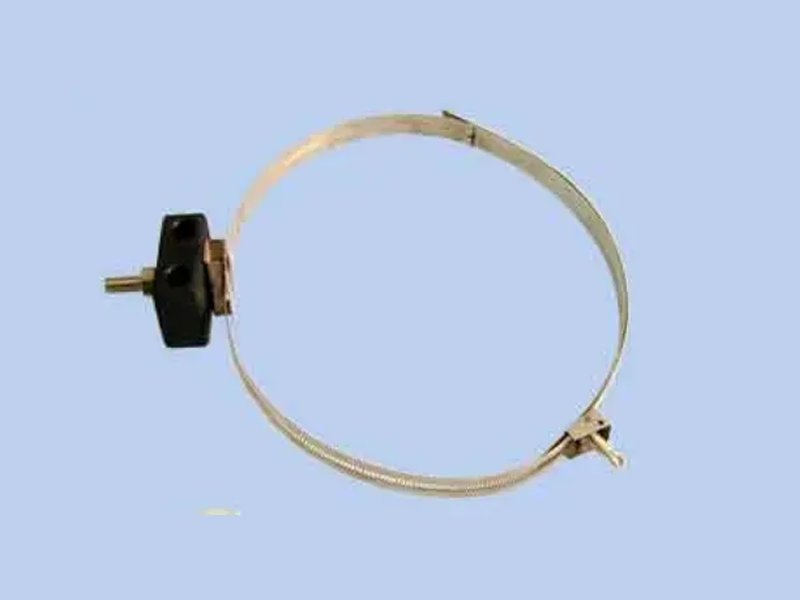
II. Two Types of Downlead Clamp for Fiber Optic Cable.
Depending on the installation environment, the Downlead Clamp for Fiber Optic Cable is generally divided into two types:
Pole-mounted downlead clamp.
Tower-mounted downlead clamp.
Each type differs in fixing method and structural components.
III. Fixing Method of Pole-Mounted Downlead Clamp.
Pole-mounted downlead clamps are mainly used on concrete or wooden poles.
Components:
· High-quality stainless steel band.
· Insulated rubber pad.
Fixing Method:
The clamp is secured by wrapping a stainless steel band around the pole. The band length can be freely adjusted according to the pole diameter to achieve a tight installation.
Key Advantages:
Strong adaptability: Suitable for poles of different diameters.
Excellent corrosion resistance: Stainless steel is ideal for outdoor use.
Cable protection: Rubber pads cushion pressure and protect the cable sheath.
IV. Fixing Method of Tower-Mounted Downlead Clamp.
Tower-mounted downlead clamps are designed for angle steel structures on transmission towers.
Components:
· Hot-dip galvanized metal fittings.
· High-quality insulated rubber pads.
Fixing Method:
The clamp is directly bolted onto the angle steel of the tower, ensuring a firm and secure connection suitable for high-strength applications.
Key Advantages:
· High structural stability: Suitable for high-altitude and long-span environments.
· Strong corrosion resistance: Hot-dip galvanization enhances durability.
· Reliable installation: Bolted connections are secure and resistant to loosening.
V. Installation Recommendations and Precautions.
To ensure long-term stable performance of the Downlead Clamp for Fiber Optic Cable, consider the following:
· Arrange clamp spacing properly to avoid excessive cable sag.
· Avoid over-tightening to prevent damage to the cable.
· Regularly inspect clamps for loosening or aging.
· Use high-quality materials to improve overall system reliability.
Although small in size, the Downlead Clamp for Fiber Optic Cable plays a vital role in ensuring the safe operation of fiber optic lines. By following standardized installation procedures and selecting the appropriate fixing method (pole-mounted or tower-mounted), the stability and service life of the cable system can be significantly improved.
For construction teams and procurement professionals, understanding the fixing principles and application differences of these clamps is essential to ensuring project quality.